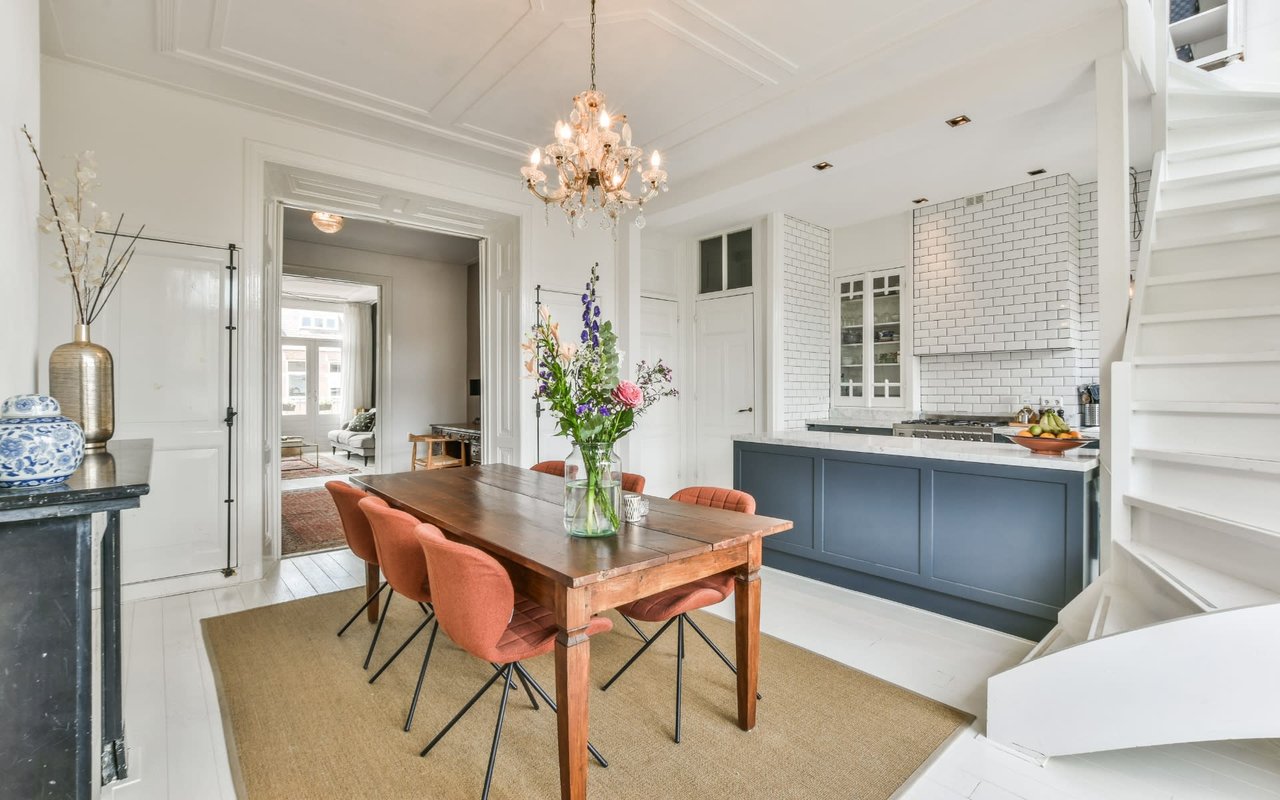
Somewhere between watching one too many HGTV marathons and doing math on the back of a napkin, you've decided you want to buy your first investment property. Good. Real estate has quietly built more generational wealth than almost anything else available to regular people — and no, that doesn't mean you need to buy a duplex sight-unseen because a podcast told you cap rates are magic. Here's what actually matters — including a few things the podcast probably left out.
First: Know Your "Why" (Cash Flow vs. Appreciation vs. Both) Before you look at a single listing, decide what you actually want this property to do for you:
Cash flow — monthly rental income after expenses. This is the "I'd like a check every month" goal.
Appreciation — the property's value climbing over time. This is the "I'll be patient and let the market work" goal.
Both — the dream. Also the reason people spend way too long analyzing spreadsheets instead of making offers.
Your strategy changes depending on which one you're chasing, so pick a lane before you fall in love with a property that doesn't actually serve your goal.
The Math You Actually Need (No Finance Degree Required)
Cap Rate (Capitalization Rate): Net Operating Income ÷ Purchase Price. This tells you the property's return as if you paid all cash. It's the quickest gut-check for "is this a real deal or just a nice house with delusions of grandeur."
Cash-on-Cash Return: Annual pre-tax cash flow ÷ total cash invested. This one's more honest about your actual return, since it accounts for financing instead of pretending you paid cash like some kind of real estate main character.
The 1% Rule (a rough gut-check, not gospel): Monthly rent should ideally be around 1% of the purchase price. A $400,000 property renting for $4,000/month clears this easily. A $400,000 property renting for $2,200/month is asking you to be very patient, very optimistic, or both.
Let's Talk About the Part Nobody Puts in the Instagram Reel: Regulatory Risk
This is the section I actually want you to read twice, because it's the part that separates people who do this well from people who end up in a Reddit thread titled "why did I ever buy a rental."
Washington — and King and Pierce Counties specifically — have real, substantive tenant protections, and they change often enough that "I looked this up two years ago" doesn't cut it anymore. A few things worth knowing before you own a single unit:
Just cause eviction is required. You can't end a tenancy just because you feel like it or found a better use for the unit. Seattle and unincorporated King County require a legally valid reason — nonpayment, lease violation, and a defined list of others — and the notice requirements are specific and unforgiving of paperwork mistakes.
Rent increase notice periods are long, and getting longer. Washington state now requires 90 days' written notice before any rent increase, and Seattle requires 180 days. There's also a statewide cap on how much you can raise rent in a 12-month period (9.683% for 2026), and no increase at all is allowed in a tenant's first 12 months.
You cannot self-help evict. Changing the locks, shutting off utilities, or removing a tenant's belongings without a court order isn't a gray area — it's illegal, full stop, regardless of how justified you feel.
Winter eviction protections exist for lower-income tenants in certain ownership situations, meaning your timeline for resolving a problem tenant might be longer than you'd expect.
Pierce County is generally less strictly enforced than King County, but "less enforced" is not the same as "not applicable." Assuming the rules don't apply to you because nobody's checking is a strategy that works right up until it doesn't
None of this means don't invest in rental property. It means budget time and legal-literacy into your plan the same way you'd budget for a new roof — because getting this wrong is genuinely expensive, both in dollars and in how long it takes to fix a mistake.
The Airbnb Question (Yes, People Always Ask)
Short-term rentals sound like the loophole — no long-term tenant, no eviction process, just weekend guests and higher nightly rates. Here's the more honest picture:
Seattle and King County regulate short-term rentals tightly. In Seattle, you generally need an operator's license, a business license, and — this is the part that surprises people — the unit usually has to be your primary residence for at least six months of the year to qualify for most STR licenses. That single-family rental you bought across town doesn't automatically qualify just because you'd like it to.
Pierce County has historically been more lenient, with lighter enforcement and less licensing friction — but "more lenient" doesn't mean unregulated, and rules do tighten over time.
Taxes stack up fast. Combined state and local lodging taxes on short-term rentals can run in the 15% range on top of your regular income tax picture — a number that changes your actual net return more than most first-time investors expect.
STRs are a different business, not a shortcut. Guest turnover, cleaning logistics, reviews, and platform fees replace the landlord headaches you were trying to avoid with a different, often more time-intensive set of headaches.
If the Airbnb angle interests you, it's worth running the real numbers — licensing costs, taxes, and your actual time commitment — before assuming it's the easier path.
The Myth That Trips Up More People Than Bad Math: "Passive" Income
I want to be direct about this one, because it's the single most common misconception I run into: owning a rental property is not passive income. Not in the "set it and forget it" sense the phrase implies.
Being a landlord means you are, functionally, running a small regulated business. That means:
Understanding and staying current on landlord-tenant law in your specific city and county — because "I didn't know the rule changed" is not a legal defense
Responding to maintenance issues on a timeline, not on your schedule
Screening tenants correctly and consistently, since inconsistent screening is one of the fastest ways to end up in a fair housing complaint
Actually reading your lease, your insurance policy, and any HOA rules that apply — not skimming them
Being financially and emotionally ready for the month a tenant stops paying, because eventually, statistically, that month arrives
None of this is meant to scare you off. It's meant to say: go in as an active, informed operator, not someone who bought a rental because a chart on the internet made 8% cash-on-cash sound effortless. The investors who do well here are the ones who treat this like the business it actually is.
What Actually Trips First-Time Investors Up
1. Underestimating expenses. Vacancy, maintenance, property management (even if it's "just" your cousin), capital expenditures for the roof that will absolutely fail the month after closing. Budget for reality, not the best-case scenario your excitement is currently running on.
2. Financing like a homebuyer instead of an investor. Investment property loans typically require larger down payments (often 20-25%) and carry different rates than owner- occupied loans. This is not the time to assume your primary-residence mortgage experience transfers directly.
3. Skipping the inspection because "it's just a rental." Tenants deserve a functioning water heater as much as you do. So does your cash flow projection.
4. Falling in love with the property instead of the numbers. This is an investment, not a soulmate. If the spreadsheet doesn't work, the crown molding doesn't save it.
5. Not knowing your market. Rent by zip code, vacancy rates, tenant demand — these vary block to block more than people expect. "It felt like a good area" is not underwriting.
A Quick Reality Check on Property Management
Deciding whether you'll self-manage or hire a property manager isn't just a preference question — it's a real cost input, and given everything above, it's also a real time and legalliteracy input. Property management typically runs 8-10% of collected rent. Factor that into your numbers before you fall in love with the projected cash flow, not after you realize why the return suddenly looks different once you account for your own time.
The Actual First Step
Get clear on your budget and financing before you start touring properties — the same way you wouldn't grocery shop hungry with no list. From there, run the numbers on a few real properties in your target area, and take an honest look at whether you're ready to be the active operator this actually requires — not just the investor collecting the check.
Ready to run real numbers on a real property — regulatory reality included? Let's talk about what a smart, well-informed first investment property actually looks like for you in King, Pierce, or Thurston County.
— Lerryn McCullough, MLG Partners